
Lecture 11 min.
Optimum currency area (OCA) is a geographic area, as opposed to a national territory, within which the goals of internal balance (low inflation and full employment) and external balance (a sustainable balance of payments) can be achieved.

The preconditions for the theory emerged a couple of decades before it was formalized. In the late 1940s and early 1950s, several leading American economists, such as Abba Lerner, Milton Friedman, James Meade and Tibor de Scitovsky, laid the foundations of analysis in international macroeconomics . They studied interregional problems of the national economy, in particular the role of the central (federal) monetary and fiscal authorities, as well as the interregional movement of goods and factors of production, as regions moved toward macroeconomic equilibrium.
The theory was created by Robert Mundell, a Canadian-born American economist. In 1961 he reformulated the analysis of how regions achieve macroeconomic equilibrium. Mundell started from the premise that the mobility of factors of production may be incomplete and that, as a consequence, restoring equilibrium in a group of regions would not be efficient. He proposed solving the inverse problem: to define a group of regions (their geographic boundaries) in such a way as to ensure internal and external balance. Such a group of regions or countries would benefit from having a single currency, whose exchange rate could float against the currencies of other groups or countries, or from fixing exchange rates among themselves .
Besides Mundell, Ronald McKinnon (Eng.) of Stanford University and Peter Kenen (Eng.) of Princeton University took part in developing the theory. They extended the criteria by which an optimum area is determined.
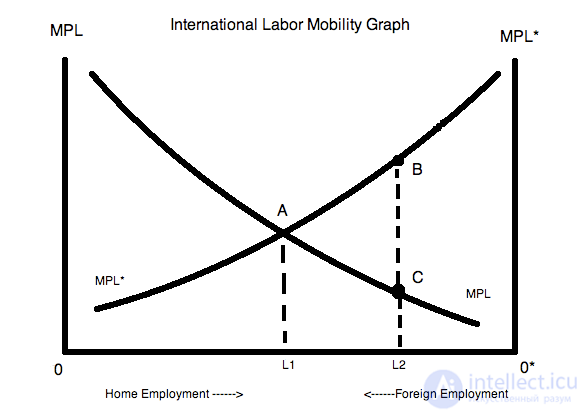
The work of the economists Mundell, McKinnon and Kenen laid the foundations of the theory of optimum currency areas. In the classical version, a currency area must meet several requirements :
The early theory of optimum currency areas was regarded as a hybrid of the Keynesian and monetarist approaches to international macroeconomics.
Milton Friedman [13]
Robert Mundell [14]
OCA theory has most often been applied in discussions of the euro and the European Union. [15] Many have argued that the EU did not in fact meet the OCA criteria when the euro was introduced, and have explained the economic difficulties of the eurozone in part by the continuing failure to meet this requirement. [16] [17] Europe does in fact perform well on some parameters that characterize an OCA (for example, the symmetry of shocks). If one looks at the correlation between the GDP growth rates of a region and of the whole area, eurozone countries show a somewhat higher correlation than US states. However, it has lower labor mobility than the United States, possibly because of linguistic and cultural differences. According to an article by O'Rourke, more than 40% of US residents were born outside the state in which they live. In the eurozone, only 14% of people were born in a country other than the one in which they live. In fact, the US economy was approaching a single labor market in the nineteenth century. For most parts of the eurozone, however, such levels of labor mobility and labor market integration remain a distant prospect. [18]In addition, the US economy, with its central federal fiscal authority, has stabilizing transfers. When a US state is in recession, every $1 fall in that state's GDP is offset by a compensating transfer of 28 cents. [18] There are no such stabilizing transfers in either the eurozone or the EU; they therefore cannot rely on fiscal federalism to smooth regional economic shocks. However, the European crisis may push the EU toward strengthening federal powers in fiscal policy. [19] [20]
Michael Kouparitsas (Federal Reserve Bank of Chicago) considered the United States as divided into eight Bureau of Economic Analysis regions, [a] (Far West, Rocky Mountains, Plains, Great Lakes, Mideast, New England, Southwest and Southeast). Developing a statistical model, he found that five of the eight regions of the country met Mundell's criteria for forming a single optimum currency area. However, he considered the fit of the Southeast and the Southwest questionable. He also found that the Plains did not fit into the optimum currency area.
The classical version of the theory had several shortcomings . First, a small open economy may be characterized by low labor mobility, which implies choosing a floating rather than a fixed exchange rate. Second, small open economies are, on average, poorly diversified. For them a floating exchange rate is preferable. Third, the more diversified an economy is, the less exposed it is to external shocks and the weaker its incentives for currency integration.
The idea of a currency that does not correspond to a state, in particular one larger than a state - formally an international monetary authority without a corresponding fiscal authority - has been criticized by Keynesian and post-Keynesian economists , who emphasize the role of government deficit spending (formally, of the fiscal authority) in managing the economy, and regard the use of an international currency without fiscal powers as a loss of "monetary sovereignty".
In particular, Keynesian economists argue that fiscal stimulus in the form of deficit spending is the most effective method of combating unemployment in a liquidity trap. Such stimulus may be impossible if the states in a currency union are not permitted to run sufficient deficits.
Post-Keynesian neochartalist theory (modern monetary theory) holds that government deficit spending creates money, that the ability to print money is fundamental to a state's ability to command resources, and that "money and monetary policy are inextricably linked to political sovereignty and fiscal power". [21] Both of these critical papers consider the transactional benefits of a common currency to be insignificant compared with these drawbacks, and in general pay less attention to the transactional function of money (the medium of exchange) and place greater emphasis on its use as a unit of account .
In Mundell's original model, countries take all the conditions as given and, assuming they have adequate information, can then judge whether the costs of forming a currency union outweigh the benefits. However, another school of thought argues , that some OCA criteria are not given and fixed, but are rather economic outcomes (that is, endogenous) determined by the creation of the currency union itself.
Consider interaction in the goods market as an example: if the OCA criteria were applied before a currency union was formed, many countries might show low trade volumes and low market integration, which means the OCA criteria are not met. A currency union therefore could not be formed on the basis of these current characteristics. However, if a currency union were created anyway, its member countries would trade much more, so that, in the end, the OCA criteria would be met. This logic suggests that the OCA criteria may be self-fulfilling. In addition, greater integration within an OCA project may also improve other OCA criteria. For example, if goods markets are better connected, shocks will be transmitted more quickly within the OCA and will be felt more symmetrically.
However, caution should be exercised in analyzing the self-fulfilling argument. First, the effect of self-fulfillment may be insignificant. According to a recent study by Richard Baldwin, a trade economist at the Graduate Institute of International Studies in Geneva, the increase in trade within the eurozone due to the single currency is much smaller: from 5% to 15%, with a best estimate of 9%. [22]
The second counterargument [ who? ] is that further integration of the goods market may also lead to greater production specialization. Once individual firms can easily serve the whole OCA market, and not just their national market, they will exploit economies of scale and concentrate production. Some sectors in an OCA may end up concentrated in a few locations. The United States is a good example: financial services are concentrated in New York, entertainment in Los Angeles, and technology in Silicon Valley. If specialization increases, each country will become less diversified and will face more asymmetric shocks, weakening the case for the self-fulfilling OCA argument.
In early work, currency areas were treated as static models. Attention was focused on the criteria an economy must satisfy in order to adopt a fixed exchange rate or a single currency. Dynamic analysis gave the theory a new impetus. There is an interrelationship among the optimality criteria. In particular, greater openness of an economy to foreign trade increases the sensitivity of prices to the exchange rate. High mobility of factors of production, including capital mobility, can compensate for a lack of price flexibility. Fiscal federalism makes it possible, in the short run, to offset shocks by redistributing resources. Thus the optimality criteria are substitutable for one another.
Professors Jeffrey Frankel (Eng.) and Andrew Rose of the University of California formulated a new endogenous version of the theory. They examined the link between two optimality criteria: trade integration and asymmetric shocks . They conclude that a reduction in foreign trade barriers leads to deeper product or sectoral specialization of regions. On the other hand, greater trade integration leads to the synchronization of business cycles. Thus, joining a currency area brings certain benefits, in particular reducing exposure to shocks and increasing the degree to which the area is optimal. However, as an area conforms ever more closely to the optimal characteristics, the benefits of currency integration decline.
In the macroeconomic literature, the theory of optimum currency areas is the most popular tool for analyzing currency integration. Alternative concepts that could replace the theory of optimum currency areas are either absent or at an early stage of development. An example of an alternative is the simpler gravity model. The theory of optimum currency areas uses a well-developed toolkit of applied analysis, in particular classical correlation-regression analysis, index analysis, structural vector autoregressions and others. Because the theory describes various aspects of integration, it goes beyond the subject of currency integration. The theory of optimum currency areas serves to assess the advisability of international (political) integration of countries with common interests.

Comments