Set and Matrix Covers, Star-Finite Covers in Combinatorial Topology

Lecture 4 min.


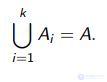
A cover of a set A is a family of its nonempty subsets A1, . . . , Ak such that
Set and Matrix Covers, Star-Finite Covers in Combinatorial Topology

. In other words, if A1, . . . , Ak is a cover of the set A, then every element a ∈ A lies in at least one of the sets A1, . . . , Ak .

Unlike a partition, a cover does not require that the sets A1, . . . , Ak be disjoint.

Cover in mathematics (combinatorial topology) — a family of sets whose union contains a given set.

Covers are usually considered in general topology, where the greatest interest lies in open covers — families of open sets. In combinatorial geometry, covers by convex sets play an important role.

A star-finite cover is a cover such that each of its elements intersects only a finite number of elements of that cover. Often, by a cover of a set A one always means a star-finite open (i.e., consisting of open sets) cover of the set A.

We will consider matrices of zeros and ones that contain no zero columns.

A cover of an m × n matrix M is a subset of its rows i1, . . . , ik such that for every j, j = 1, . . . , n, there is an index s = s(j), 1 ≤ s(j) ≤ k, such that ms(j),j = 1.

In other words, a subset of rows i1, . . . , ik of the matrix M is a cover of it if the submatrix formed by these rows has no zero columns. A cover of a matrix is also called a covering of the columns of the matrix by its rows.

Definitions

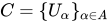
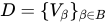
  • Let a set Set and Matrix Covers, Star-Finite Covers in Combinatorial Topology be given. A family of sets Set and Matrix Covers, Star-Finite Covers in Combinatorial Topology is called a cover of Set and Matrix Covers, Star-Finite Covers in Combinatorial Topology if

Set and Matrix Covers, Star-Finite Covers in Combinatorial Topology

  • Let a topological space Set and Matrix Covers, Star-Finite Covers in Combinatorial Topology be given, where Set and Matrix Covers, Star-Finite Covers in Combinatorial Topology is an arbitrary set and Set and Matrix Covers, Star-Finite Covers in Combinatorial Topology is a topology defined on Set and Matrix Covers, Star-Finite Covers in Combinatorial Topology. Then a family of open sets Set and Matrix Covers, Star-Finite Covers in Combinatorial Topology is called an open cover of the set Set and Matrix Covers, Star-Finite Covers in Combinatorial Topology if

Set and Matrix Covers, Star-Finite Covers in Combinatorial Topology

Related definitions

  • If Set and Matrix Covers, Star-Finite Covers in Combinatorial Topology is a cover of the set Set and Matrix Covers, Star-Finite Covers in Combinatorial Topology, then any subset Set and Matrix Covers, Star-Finite Covers in Combinatorial Topology that is also a cover of Set and Matrix Covers, Star-Finite Covers in Combinatorial Topology is called a subcover.
  • If every element of one cover is a subset of some element of a second cover, the first cover is said to be inscribed in the second (a refinement of it). More precisely, a cover Set and Matrix Covers, Star-Finite Covers in Combinatorial Topology is inscribed in a cover Set and Matrix Covers, Star-Finite Covers in Combinatorial Topology if

Set and Matrix Covers, Star-Finite Covers in Combinatorial Topology such that Set and Matrix Covers, Star-Finite Covers in Combinatorial Topology

  • A cover Set and Matrix Covers, Star-Finite Covers in Combinatorial Topology of a set Set and Matrix Covers, Star-Finite Covers in Combinatorial Topology is called locally finite if for every point Set and Matrix Covers, Star-Finite Covers in Combinatorial Topology there exists a neighborhood Set and Matrix Covers, Star-Finite Covers in Combinatorial Topology that intersects only a finite number of elements of Set and Matrix Covers, Star-Finite Covers in Combinatorial Topology, that is, the set Set and Matrix Covers, Star-Finite Covers in Combinatorial Topology is finite.
  • A cover Set and Matrix Covers, Star-Finite Covers in Combinatorial Topology of a set Set and Matrix Covers, Star-Finite Covers in Combinatorial Topology is called fundamental if every set whose intersection with each set Set and Matrix Covers, Star-Finite Covers in Combinatorial Topology is open in Set and Matrix Covers, Star-Finite Covers in Combinatorial Topology is also open in Set and Matrix Covers, Star-Finite Covers in Combinatorial Topology.
  • Set and Matrix Covers, Star-Finite Covers in Combinatorial Topology is called compact if every open cover of it contains a finite subcover;
  • Set and Matrix Covers, Star-Finite Covers in Combinatorial Topology is called paracompact if every open cover of it can be refined by a locally finite open cover.

Covering dimension

A topological space X is said to have covering dimension n, if every open cover of X has a point-finite open refinement such that no point of X lies in more than n + 1 sets of the refinement, and if n is the minimal value for which this is true. If no such minimal n exists, the space is said to have infinite covering dimension.

Example of a matrix cover

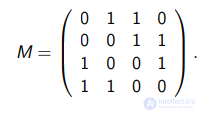
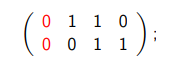
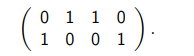
Example 1. Let

Set and Matrix Covers, Star-Finite Covers in Combinatorial Topology

Then the 1st and 2nd rows do not cover the matrix
Set and Matrix Covers, Star-Finite Covers in Combinatorial Topology

while the 1st and 3rd rows are a cover of the matrix M:
Set and Matrix Covers, Star-Finite Covers in Combinatorial Topology

Properties

  • Any subcover is inscribed in the original cover. The converse, generally speaking, is false.

See also

  • Chart, Atlas (mathematics)
  • Nerve of a cover
  • Lebesgue dimension
  • Graph cover
  • Star refinement
  • Gradient cover of a matrix
  • Shortest cover of a matrix
  • Shadow of a set
  • Shadow of a set of tuples
created: 2021-03-13
updated: 2026-09-29
139


Was this answer useful?
Choose a quick rating so we can improve the next answer for you.
How satisfied are you?


Comments

To leave a comment

If you have any suggestion, idea, thanks or comment, feel free to write. We really value feedback and are glad to hear your opinion.
To reply

Lectures and tutorial on "Elements of combinatorial and differential topology. Differential geometry and topology."

Terms: Elements of combinatorial and differential topology. Differential geometry and topology.

Sign in and the lectures you have studied will be marked in this list.

Choose a course