
Lecture 3 min.
The IT startup and its stages
IT startup: A company implementing a new business idea, most often operating at a loss at first
Main stages:
• PowerPoint startups
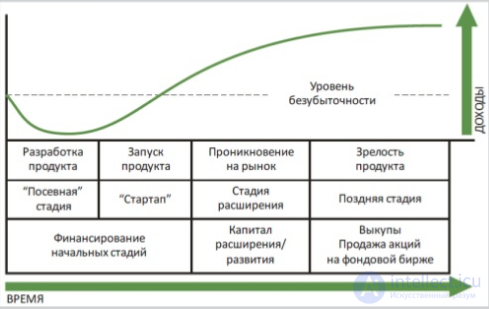
• "seed" stage
• launch stage
• growth stage (Break-Even Point)
• expansion stage (profit)
• (investor) "exit" stage
Extended stages: 1. PRE-STARTUP
– Pre-seed stage
– Seed stage
– Mock-up
– Working prototype
– Alpha version of the product
– Closed beta version of the product
– Public beta version of the product
Extended stages: 2. LAUNCH –
Putting the product into operation
– Analysis of the market response
– Work with the first customers
Extended stages: 3. POST-STARTUP
– Growth stage
– Expansion stage
– Exit stage
J-Curve
Venture funds
Special organizations for financing startups. Up to 80% of investments are loss-making. The profit from the rest pays for everything.
In Russia ~10 years, in the USA ~70 years
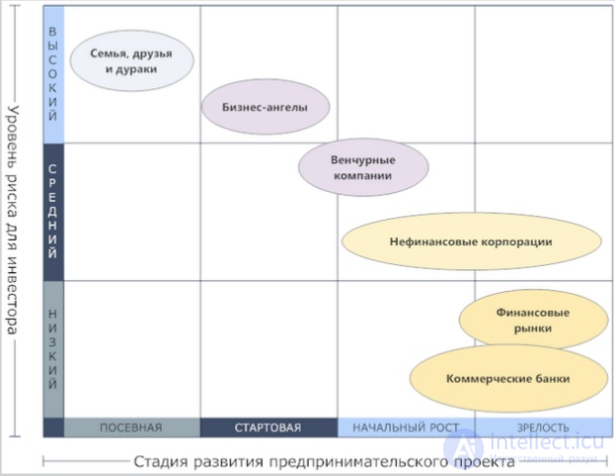
Venture funds
• "business angels" (money, connections, management)
• classic funds (money)
• smart funds (money, connections, recommendations)
About "documents"
• Business plan - the main one
• "Elevator pitch"
• "Teaser"
• Presentation
• Investment plan (financing scheme)
• Financial statements
1. Executive summary
• Product
• Team
• Market size and opportunities
• Business model Business model
• Investment
• Investor exit
• Market and industry
2. Market and industry
• Market development prospects
• Market size, segment and potential consumers
• Direct and alternative competition
• Competitive advantages
3. Product and technology
• Distinctive features of the product
• Possibility of indirect application of the product
• Technologies used
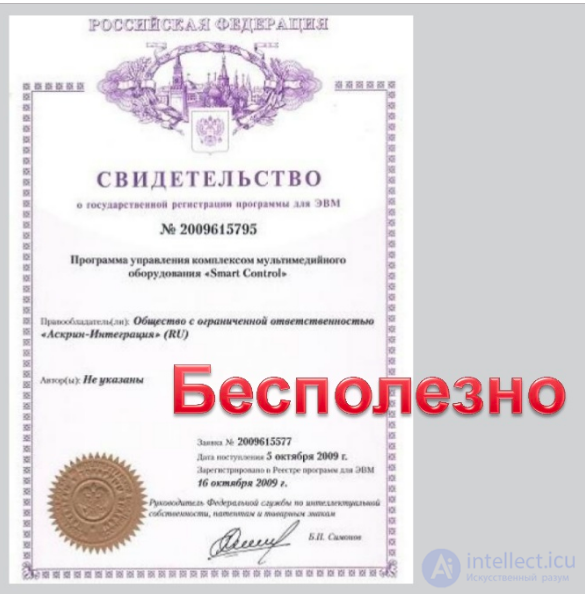
4. Intellectual property and protection
• Existing patents
• Patenting prospects
5. Team
• Founders
• Management
• Development
6 Business model
• Production
• Service
• Marketing
• Sales development strategy through primary and alternative channels
• Expected time to market entry
• Key performance indicators
7. Finance
• Sales forecast
• Operating and capital expenditures
• Consolidated financial forecast
8. Project risks
9. Investment and exit strategy
• Amount of investment requested
• Structure and schedule of investment use
• Expected exit strategy
Intel started with a business plan consisting of three! paragraphs. "It is assumed that many of the customers will be located outside California" $2.5 million in 1968 the reason - the team - from Fairchild Semiconductors
Project parameters
TCO - Total cost of ownership
SAM - Serviceable available market
SOM – Serviceable obtainable market
TAM = SAM + SOM
NPV ~ investor's net profit
IRR - Internal rate of return - the % at which NPV=0
PBP – payback period, the date when NPV>0
ROI – profitability indicator
• copyright
– Exclusive right
– Right of authorship
– Right to a name
– Right of integrity
– Right of publication (disclosure)
• patents and industrial designs
• trademarks
• trade secrets
• Patentable
– Algorithms
– Methods, processes
– Interfaces
• Not patentable
– Mathematical methods
– Program texts
• Legal entities
– Limited Liability Companies
– Closed Joint-Stock Companies
– Open Joint-Stock Companies
• Individual Entrepreneurs
• "Corporate" – 18%
VAT – 20%
profit – 2.2%
property (fixed assets)
• Simplified tax system – 6% of turnover – 15% of income
• on employees' salaries
– 13% personal income tax - direct
– 30% funds – hidden

Comments