
Lecture
Faceted search (also faceted navigation or faceted browsing) — a method of accessing information using several filters — facets — at the same time. It is organized according to a faceted classification
To use faceted search, each information unit is classified according to several explicit characteristics (facets) . Faceted search is contrasted with the taxonomic order of filtering and ordering .
Facet properties can be obtained by analyzing the text of an information item and extracting characteristics. Or by a set of fields that already existed in the database (for example, author, language, format, reading time). In this way, existing web pages can gain additional navigation through faceted search.
In 2006, a workshop on faceted search was held in Seattle.
Full-text search — searching for products by word or phrase. For the user — this is a text input field with a «Search» button, available on any page of the site.
Faceted search — searching for a product by several characteristics: color, size, memory capacity, price, etc. For the user — this is a set of filters. Each filter is linked to only one characteristic and vice versa. The filter's values — all possible values of the characteristic. The user sees filters on the section page, the category page, and on the full-text search results page. When the user selects a value, the filter is considered active.
The difference is that facets let you select only intersecting values, while ordinary filters simply select information according to the entered data.
Faceted search by itself is a narrowing selection, in which the possible filter values depend on the results already present in the selection. That is, if there are filters by brand and OS, then clicking Apple makes the "Android" filter disappear, preventing the user from clicking criteria that would give a zero-result selection.
What, then, are the essential differences between faceted search and simple search?
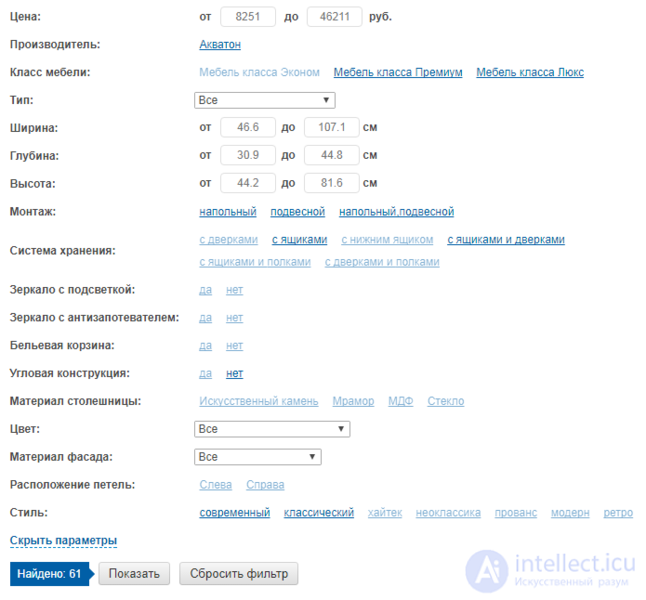
You can see an example of faceted search in the screenshot below.
 |
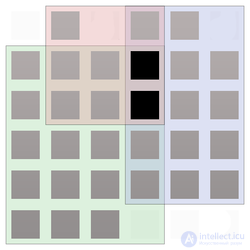 |
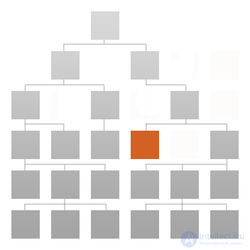
| Navigational search | Faceted search |
The Association for Computing Machinery, within the framework of SIGIR, presented this description of the role of faceted search:
SIGIR states that direct search has taken the dominant position, while navigational search is becoming less and less popular . Faceted search lets users move through a multidimensional information space by combining text search with a gradual narrowing of choices along each dimension . It is the dominant mechanism on e-commerce sites . As of 2006, it was extending to semi-structured data and tags (arbitrary labels) .
Briefly, it works like this: a filter filters products and filters the choices available in other filters.
This part is simple. The user has selected:
In terms of Boolean algebra: a logical «AND» applies between filters, and a logical «OR» between values within a filter. Simple logic.
«Well… whatever options exist — are shown, whatever doesn't — is hidden» — that's roughly how business describes filter behavior. Sounds logical. In practice, it works like this:
The number of filter values depends on the number of products: the more products with a differing value of a characteristic, the more values in the filter. The user reduced the number of products in the selection for the other filters when they chose a brand. This led to the value lists being updated.
From this follows a universal rule: filter values are extracted from the product selection formed by the remaining active filters.
Each active filter has its own product selection.
If we have N filters and:
As a result, when the user selects a value in a facet filter, the following happens:
Faceted search is widely used in commerce, for example in online stores and libraries. More and more developers are providing software solutions for faceted search.
Online retailers typically offer the ability to filter by product type, brand, and price.
In the early 2000s, retailers began using faceted search. A 2014 benchmark of the 50 largest American online stores shows that, despite the advantages of faceted search, only 40% of sites had implemented it
Such a search helps potential buyers avoid getting lost among the whole variety of offers and find exactly what they need.
Librarianship
In 1933, librarian Shiyali Ramamrita Ranganathan proposed a facet classification for books, now known as the Colon classification. However, it failed to replace the more popular Dewey Decimal Classification .
Modern electronic library catalogs are increasingly using faceted search. For example, the Online Computer Library Center, WorldCat, and CiteSeerX .

Comments