
Lecture 11 min.
A crypto wallet (or cryptocurrency wallet) is a software or hardware device that allows you to store, send, and receive cryptocurrency such as Bitcoin, Ethereum, Litecoin, and others. A wallet gives the user access to their cryptocurrency assets and lets them manage them.
There are several types of crypto wallets, including online wallets, mobile wallets, client (desktop) wallets, hardware wallets, and paper wallets. Each has its own features and security levels, and the choice depends on the user's preferences and needs.
It is important to remember that the security and proper management of your private keys are crucial when using crypto wallets, in order to prevent loss of funds or unauthorized access.
. Here are some of the most common types of bitcoin wallets:
Online wallets (Web Wallets):
Mobile wallets (Mobile Wallets):
Client wallets (Desktop Wallets):
Hardware wallets (Hardware Wallets):
Paper wallets (Paper Wallets):
HD wallets (Hierarchical Deterministic Wallets):
Each of these wallet types suits different usage scenarios. The choice depends on your needs for ease of use and the level of security you are willing to maintain. It is important to keep security in mind and to back up your wallets regularly.
Custodial wallets and non-custodial wallets represent two different ways of storing and managing cryptocurrency:
Custodial wallets (Custodial Wallets):
Non-custodial wallets (Non-Custodial Wallets):
The choice between custodial and non-custodial wallets depends on your preferences and security needs. If you want a higher level of control and security, a non-custodial wallet (a crypto wallet) may be the preferred choice. However, it also requires a more responsible and conscious approach to storing and backing up private keys. Custodial wallets may be more convenient, but they may mean that you trust a third party to manage your funds.
The wallet.dat file is the structural wallet file for Bitcoin (BTC) and other cryptocurrencies that use the same format. This file contains information about the private keys, public keys, and transactions associated with the wallet. In addition to private keys and public keys, wallet.dat also stores the transaction history, addresses, and other data needed to manage the funds in the wallet.
The structure of the wallet.dat file is complex and consists of serialized data stored in a binary format. This file is encrypted and is an important part of your wallet, so it is not recommended to edit or modify it manually without understanding its structure and the possible consequences.
If you need to work with the data in the wallet.dat file, it is best to use software libraries or software designed for working with Bitcoin wallets. For example, you can use Bitcoin Core, the official Bitcoin software, to manage the wallet and perform the necessary operations.
Note that, for security and to prevent loss of funds, it is important to regularly back up the wallet.dat file and store the copies in a safe place. Also keep access to these files secure, since they contain important sensitive information.
the changes that occurred in the structure of wallets after the introduction of the BIP32 key derivation source (hierarchical HD wallets) for Bitcoin. This method added significant flexibility and security to the management of addresses and keys.
Information about BIP32 wallets is stored in the xpriv (extended private key) and xpub (extended public key) format. The entire hierarchical tree of keys can be restored from a single root key (xpriv or xpub), which makes the process of creating and managing addresses more secure and efficient.
When using HD wallets, you do not need to save each private key separately for every address created. Instead, you create child keys for each new transaction or address, and they are generated from your root key. This significantly simplifies the process and improves security.
Also, as you correctly noted, checking address types (for example, segwit or p2pkh) and checking specific wallet versions can be one way to determine the wallet type. HD wallets usually work with segwit addresses, which is a more modern and efficient method of storing and transferring funds.
Keep in mind that when migrating from legacy wallets to HD wallets, or when using HD wallets, it is important to save backups of the root keys (xpriv and xpub) correctly, since they are essential for restoring access to your funds.
The description of Bitcoin addresses and their role in the Bitcoin network is largely accurate and covers the important aspects. Here is a more detailed explanation:
The role of Bitcoin addresses: Bitcoin addresses are used to identify and mark the location of bitcoins on the blockchain. They are similar to bank account details and serve for sending and receiving bitcoins. Addresses allow users to make transactions on the Bitcoin network and to keep track of the state of their funds.
Generating Bitcoin addresses: Bitcoin addresses are generated using cryptographic methods, which include generating random numbers and applying hash functions. Users can create Bitcoin addresses in order to receive payments or create transactions.
Transactions: Transactions on the Bitcoin network are records of the transfer of bitcoins from one address to another. Transactions include inputs (funds sent from the source address) and outputs (recipient addresses to which the funds are sent). Transactions are also signed using private keys, which provides security and authentication.
Loss of bitcoins: It is important to understand that bitcoins are not physically stored in wallets or in addresses. They exist on the blockchain. When you "lose" bitcoins, this usually means that you have lost access to the private keys needed to control the bitcoins associated with a particular address. Restoring access to lost bitcoins may be impossible, which is why it is important to keep backup copies of keys and wallets carefully.
Loss of bitcoins is possible in the following cases:
A general understanding of how Bitcoin addresses and transactions work is important for the safe and effective use of bitcoins. Remember that bitcoins are cryptographic assets, and storing and using them securely requires attention to detail and the implementation of security rules.
(A Bitcoin address is an identifier (account number) that begins with 1 or 3 and contains 26-35 alphanumeric Latin characters (excluding 0, O, I).)
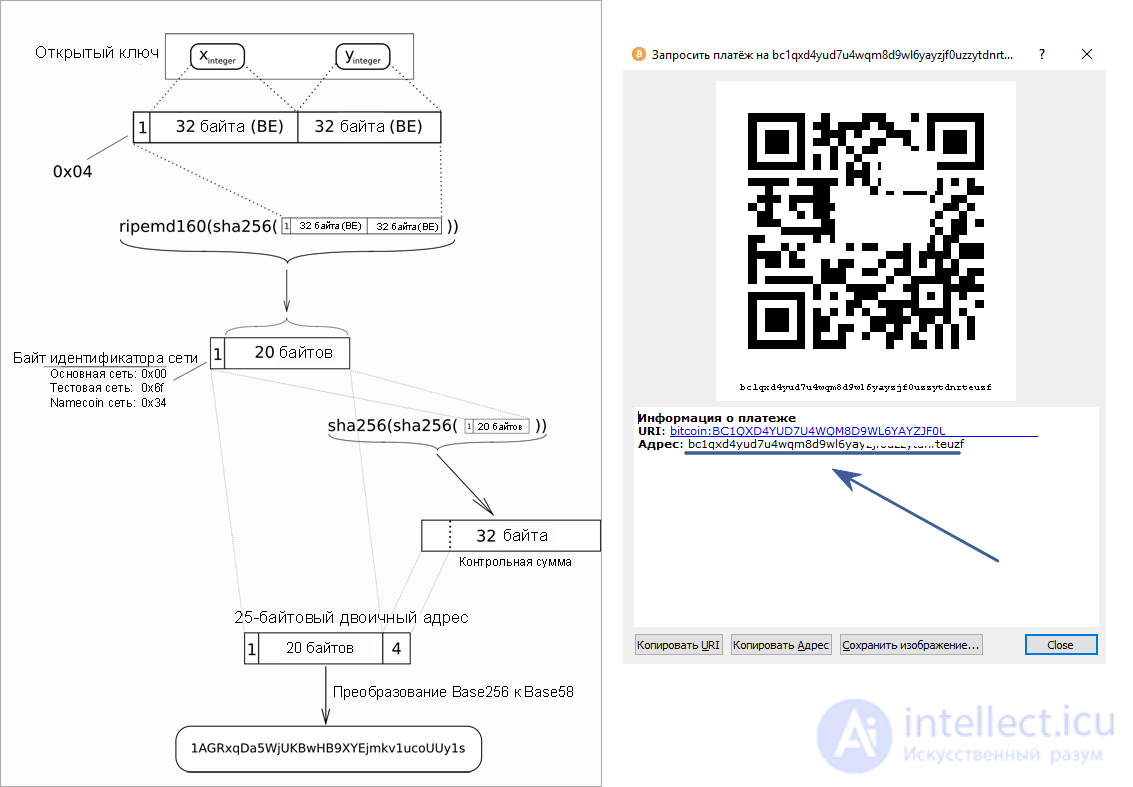
Storing cryptocurrencies has a number of special features and requires extra caution, because cryptocurrencies are digital assets and their loss may be irreversible. Here are some features of cryptocurrency storage:
No centralized authorities: Cryptocurrencies are decentralized, which means there are no central authorities or banks that could recover lost funds or reverse transactions. This means that user error or carelessness can lead to the loss of funds.
Private keys: A private key is required to access cryptocurrencies. It is the equivalent of a password and must be kept safe. Losing the private key means losing access to the funds at the address.
Storage on hardware wallets: To increase the security of their funds, many users prefer to use hardware wallets. These are physical devices that store private keys in an isolated environment, which makes them less vulnerable to online attacks.
Backups: It is important to regularly create backup copies of private keys or wallets. This makes it possible to restore access to funds if a device is lost or damaged.
Public addresses: Public addresses can be used to receive payments, and it is safe to share them with others. However, knowing a public address does not make it possible to send funds from that address. Attackers can use an address only to monitor its balance.
Multiple wallets: Many users use several wallets for different purposes. For example, large sums are kept on hardware wallets, while everyday transactions are handled with mobile or web wallets.
Caution online: Be careful when using online wallets or exchanges. They can be vulnerable to cyberattacks. Use only reliable and proven platforms.
Password and access security: Strong passwords and security measures such as two-factor authentication (2FA) are important for protecting your wallet.
Anonymity: Remember that cryptocurrency transactions can be traced. If anonymity matters to you, look into cryptocurrencies designed for enhanced privacy, such as Monero or Zcash.
Education: Understanding how cryptocurrencies work and being aware of security methods are key to storing funds successfully and safely.
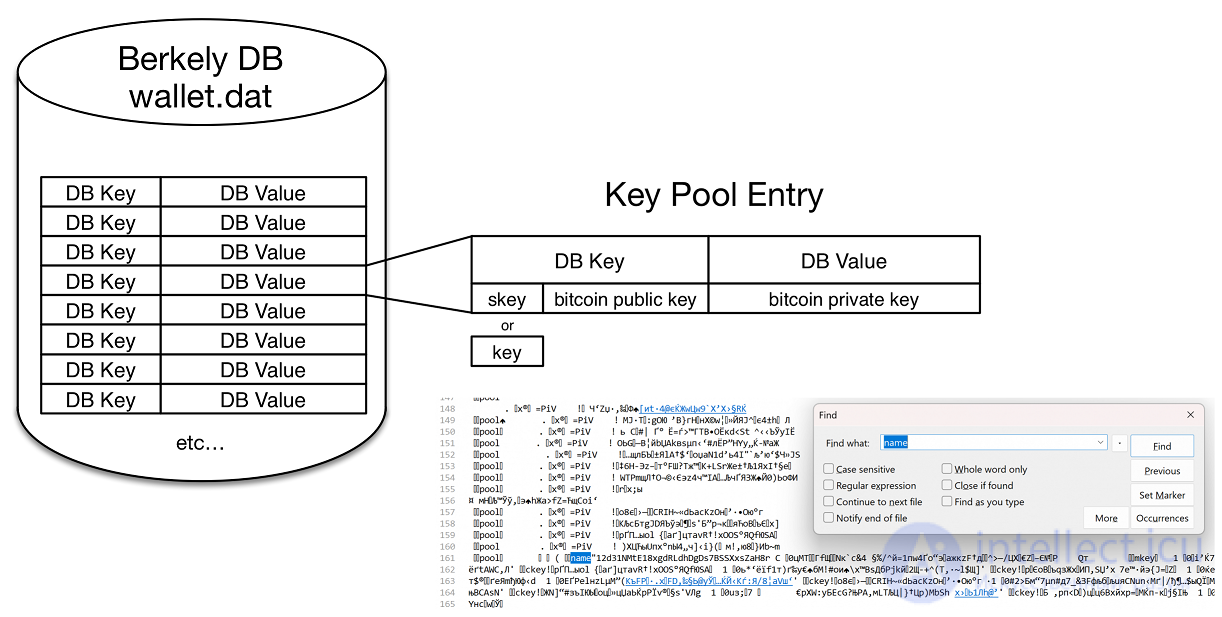
Fig. Structure of the old format of the wallet.dat file
It is important to remember that cryptocurrencies are assets, and their secure storage and management require special caution.

Comments