
Signal Wobbulation: Wobbling of Sound, Light and Motion vs Modulation

Lecture 11 min.


Wobbulation is an ambiguous term that is used for different purposes in different cases.
For example, "Wobbulation (TV) is the swinging of the cathode-ray tube's electron beam in the direction transverse to the line, at such a frequency that during the transmission of a single picture element the beam makes one or several oscillations with an amplitude within half of the scanning pitch."

"...Wobbulation is a smooth change of the pulse repetition frequency within a certain range, used when operating under active jamming..."
Or: "One of the methods of pointing an antenna at a target is conical scanning (wobbulation) of the beam at an auxiliary frequency relative to the equisignal line, produced by mechanical rotation of the antenna or by electronic methods."
Or again: "To resolve ambiguity in both range and velocity, wobbulation of the repetition frequency can be used, which must be done slowly enough not to affect the quality of velocity selection." This comes from the field of radar, and is used to get rid of "blind speeds" in a system with MTI. The high frequency (GHz) does not change; what changes is the repetition frequency of the probing pulses, for example from .... to .... Hz and back.

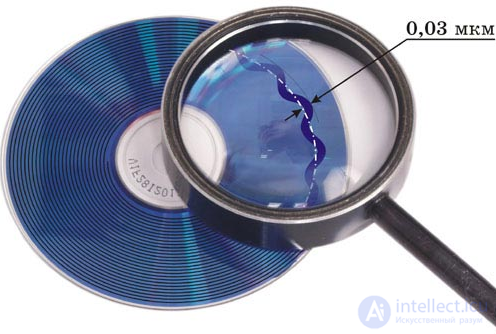
"...In particular, in a CD-R the groove is not made as a perfectly even spiral, as Archimedes would have imagined it, but with microscopic deviations, called wobbulation (Fig. 5).
Signal Wobbulation: Wobbling of Sound, Light and Motion vs Modulation

The frequency of the groove's oscillations relative to the spiral path is 22.05 kHz (for a disc rotation speed of 1x). Accordingly, one period of these oscillations takes up 60 µm of the spiral path. The amplitude of the oscillations is only 0.03 µm, much smaller than the width of the groove itself, but this is enough to pick out oscillations at a frequency of 22.05 kHz and to use these oscillations to synchronize the frequency of the drive's own clock generator..."

Signal wobbulation

Thus, signal wobbulation is the intentional change of one or more of its characteristics according to a certain law.

The most common types of wobbulation:

  • Frequency wobbulation: changing the carrier frequency of the signal within a given range.
  • Amplitude wobbulation: changing the amplitude of the signal within a given range.
  • Phase wobbulation: changing the phase of the signal within a given range.

Wobbulation can be used for various purposes, such as:

  • Improving noise immunity: by changing the characteristics of the signal, it can be made more resistant to various kinds of interference.
  • Improving communication quality: wobbulation can be used to optimize signal parameters for a particular communication channel.
  • Information protection: some wobbulation methods are used to encrypt information transmitted over a communication channel.
  • Parameter measurement: wobbulation can be used to measure the parameters of radio systems, such as channel capacity or the standing wave ratio.

Depending on the purpose, wobbulation can be carried out in various ways:

  • Using electromechanical devices: for example, a rotating capacitor can be used to wobbulate the frequency of a radio signal.
  • Using electronic circuits: there are many electronic circuits designed to wobbulate various parameters of a radio signal.
  • Using digital methods: modern digital signal processing systems make it possible to implement complex wobbulation algorithms with high precision.

Signal wobbulation is an important tool used in various fields of radio engineering, communications, and computer science.

It makes it possible to solve many tasks related to improving communication quality, protecting information, measuring parameters, and controlling signals.

Radio signal wobbulation

In radio engineering, radio signal wobbulation means the intentional change of one or more of its characteristics according to a certain law.

The most common types of wobbulation:

  • Frequency wobbulation: changing the carrier frequency of the radio signal within a given range.
  • Amplitude wobbulation: changing the amplitude of the radio signal within a given range.
  • Phase wobbulation: changing the phase of the radio signal within a given range.

Wobbulation can be used for various purposes, such as:

  • Improving noise immunity: by changing the characteristics of the signal, it can be made more resistant to various kinds of interference.
  • Improving communication quality: wobbulation can be used to optimize signal parameters for a particular communication channel.
  • Information protection: some wobbulation methods are used to encrypt information transmitted over a radio channel.
  • Parameter measurement: wobbulation can be used to measure the parameters of radio systems, such as channel capacity or the standing wave ratio.

Depending on the purpose, wobbulation can be carried out in various ways.

Some examples:

  • Using electromechanical devices: for example, a rotating capacitor can be used to wobbulate the frequency of a radio signal.
  • Using electronic circuits: there are many electronic circuits designed to wobbulate various parameters of a radio signal.
  • Using digital methods: modern digital signal processing systems make it possible to implement complex wobbulation algorithms with high precision.

Radio signal wobbulation is an important tool used in various fields of radio engineering.

It makes it possible to solve many tasks related to improving communication quality, protecting information, and measuring the parameters of radio systems.

Sound wobbulation

In some cases it may be used to describe a vibration of sound caused by fluctuations in frequency.

For example:

  • Sound wobbulation may be caused by a fault in the audio system, such as a damaged speaker or cable problems.
  • It may also be caused by external factors, such as vibrations from an engine or road noise.

In other cases, "sound wobbulation" may be used to describe an effect created by special audio tools or techniques.

For example:

  • DJs may use wobbulation to change the speed or pitch of music.
  • Composers may use wobbulation to create interesting sound effects.

It is important to note that "sound wobbulation" is not a widely used term, and its meaning may vary from person to person.

If you are unsure of the meaning, it is best to ask the person who is using it.

Here are some other terms that may be more precise for describing what you have in mind:

  • Sound vibration: this term more accurately describes fluctuation in the frequency of sound.
  • Sound modulation: this term is used to describe the change of one characteristic of a sound (such as volume or frequency) by another characteristic.
  • Sound artifacts: this term is used to describe any unwanted sounds that may be heard in an audio system.
  • Sound effects: this term is used to describe artificial sounds created by various methods.

Motion wobbulation

Motion wobbulation is a rare term, and its meaning may change depending on the context.

In some cases it may be used to describe an oscillating movement caused by uneven force or instability of a system.

For example:

  • Wobbulation of an aircraft may be caused by turbulence or a malfunction of the control system.
  • Wobbulation of a car may be caused by an uneven road or a malfunction of the suspension.
  • Wobbulation of a mechanism may be caused by worn parts or incorrect adjustment.

In other cases, "motion wobbulation" may be used to describe an intentional change in the trajectory of movement, for example for maneuvering or avoiding obstacles.

For example:

  • Wobbulation by a cyclist may be used to avoid a collision with another cyclist or a car.
  • Wobbulation by a figure skater may be used to perform tricks.
  • Wobbulation by a dancer may be used to create expressive movements.

It is important to note that "motion wobbulation" is not a widely used term, and its meaning may not be clear to everyone.

If you are unsure of the meaning, it is best to ask the person who is using it.

Here are some other terms that may be more precise for describing what you have in mind:

  • Oscillatory motion: this term more accurately describes movement with periodic changes of direction.
  • Unstable motion: this term is used to describe movement that can easily deviate from a given trajectory.
  • Maneuvering: this term is used to describe an intentional change in the trajectory of movement.
  • Obstacle avoidance: this term is used to describe movement that makes it possible to avoid a collision with an obstacle.

Color wobbulation

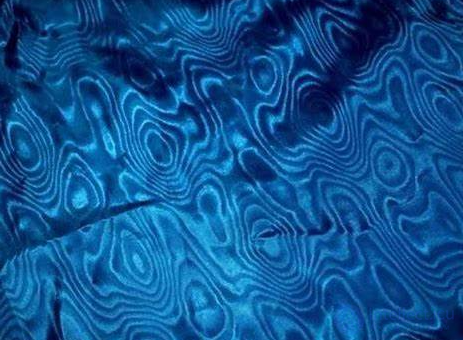
Color wobbulation, also known as color moiré, color interference or color banding, is a visual artifact that occurs when two or more patterns of similar color are superimposed.
Signal Wobbulation: Wobbling of Sound, Light and Motion vs Modulation

Most often this happens:

  • In printing: when halftone dots in color images are misaligned, for example due to inaccurate registration of the printing plates.
  • On screens: when the pixels on two different displays do not match, or with poor-quality video compression, when colors get "blurred".
  • In optics: when interference fringes from different light sources are superimposed.

Color wobbulation can be minor and barely noticeable, and in some cases it can be very noticeable and annoying.

There are several ways to reduce or eliminate color wobbulation:

  • In printing: use a higher print resolution, more accurate registration of the printing plates, and special halftone dots.
  • On screens: calibrate the monitors, and use a higher resolution and better video quality.
  • In optics: use filters or change the angle of illumination.

Examples of color wobbulation:

  • The rainbow stripes that can be seen on some CDs under direct light.
  • Moiré patterns that sometimes appear in photographs taken through a mesh.
  • Color bands that may be visible in video shot in poor lighting.

Color wobbulation can be a problem in various fields, including:

  • Printing: it can make images blurry and unattractive.
  • Photography: it can spoil photographs and make them unusable.
  • Digital video: it can make video unpleasant to watch.

It is important to understand the causes of color wobbulation and the methods of eliminating it in order to achieve the best image quality in various applications.

How wobbulation differs from modulation

Wobbulation and modulation are two concepts that are often used in radio engineering and other fields related to signals.

Although they may seem similar, there are significant differences between them:

Modulation is the process of superimposing an information signal onto a carrier signal.

A carrier signal is a signal that carries information over a distance.

An information signal is a signal that contains the information itself (for example, sound, an image, or data).

In modulation, the characteristics of the carrier signal (such as amplitude, frequency, or phase) are changed in accordance with the information signal.

This makes it possible to transmit information over a distance.

Wobbulation, on the other hand, is not related to superimposing an information signal.

It is an intentional change of one or more characteristics of a signal according to a certain law.

This law may be sinusoidal, sawtooth, triangular, or random.

The purposes of wobbulation can vary:

  • Improving noise immunity: wobbulation can make a signal more resistant to various kinds of interference.
  • Improving communication quality: wobbulation can be used to optimize signal parameters for a particular communication channel.
  • Information protection: some wobbulation methods are used to encrypt information.
  • Parameter measurement: wobbulation can be used to measure the parameters of radio systems.

Thus, the main difference between wobbulation and modulation is that:

  • In modulation, an information signal is superimposed on the carrier signal.
  • In wobbulation, the characteristics of the signal itself are changed according to a given law, regardless of whether an information signal is present.

In some cases, wobbulation can be used as part of the modulation process.

For example, frequency modulation (FM) uses wobbulation of the carrier signal's frequency to transmit information.

Thus, by knowing the difference between wobbulation and modulation, you can use these terms correctly and understand the operating principles of various devices and systems.

created: 2024-05-28
updated: 2026-09-29
259


Was this answer useful?
Choose a quick rating so we can improve the next answer for you.
How satisfied are you?


Comments

To leave a comment

If you have any suggestion, idea, thanks or comment, feel free to write. We really value feedback and are glad to hear your opinion.
To reply

Lectures and tutorial on "Signal and linear systems theory"

Terms: Signal and linear systems theory