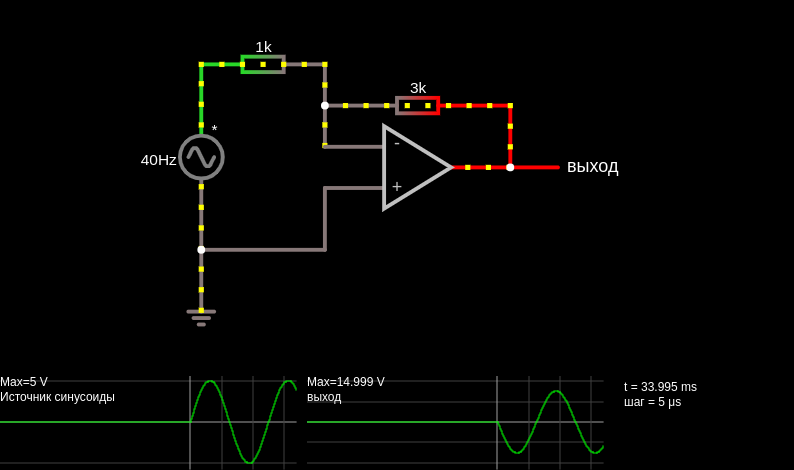
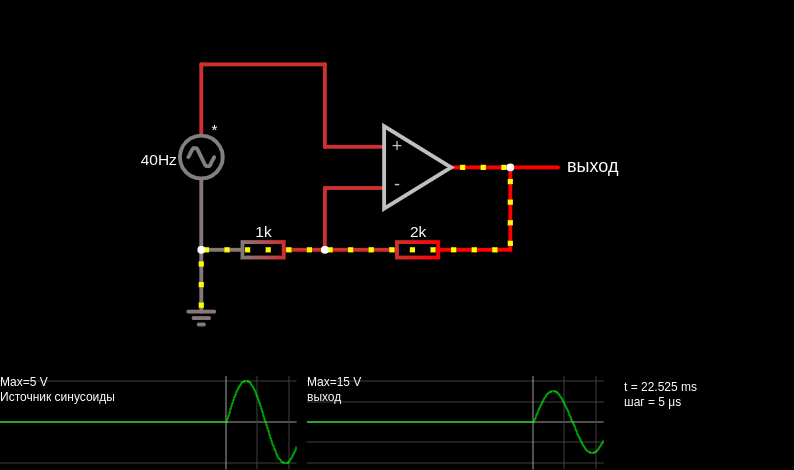
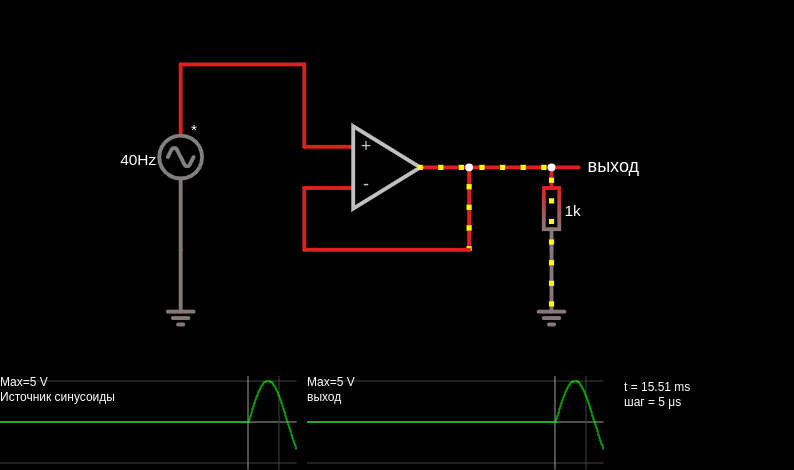
Online simulation of the умножитель емкости circuit

A capacitance multiplier (electronic choke) — is an active electronic circuit based on transistors or op-amps that lets you simulate a large-capacitance capacitor using a capacitor of a much smaller rating. It effectively smooths out voltage ripple in power supplies, replacing bulky electrolytic capacitors or chokes. 
 
Key characteristics and applications:
  • Principle of operation: The circuit increases the effective capacitance of the capacitor  C by  β+1 times (where β — is the transistor's gain).
  • Application: Used in power supplies (especially tube and audio amplifiers) to reduce AC hum, providing high dynamics and voltage stability.
  • Advantages: Allows a huge effective capacitance to be obtained while using compact components.
  • Limitations: The maximum input voltage is limited, and there is also a dependence on the voltage drop across the transistor. 
     
Now let us consider an example of such a capacitance-multiplier circuit

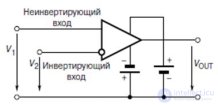
The circuit uses an op-amp and a small capacitor to simulate a much larger capacitor. It simulates the circuit at the bottom; the resistor R2 is the same size as the resistor in the simulated circuit (R3), but the capacitor C1 is 100 times smaller than C2. Current flows from the input source through R1 to the capacitor (C1). Since R1 is 100 times larger than R2, 1/100 of the current flows through it into the capacitor. For a given input voltage, the rate of change of the voltage on C1 is the same as on C2, because C2 has 100 times more capacitance to compensate for the 1/100 current. Thus the voltages on the two capacitors are the same, but the currents are not. The op-amp keeps the - input at the same voltage as the voltage on C1. This means R2 has the same voltage across it as R3, and therefore the same current.

This page is a utility for simulating умножитель емкости online with specified initial values.

The online circuit simulator allows you to model circuit behavior in real time. You can change circuit parameters, add new elements, and observe their interactions. This is a useful tool for learning and experimenting with electronic circuits.
⚡ Circuit Online 
Left-click — place/select · hover over an end (◯ highlights) and drag — stretch · wheel — zoom · middle/right-click — pan · double-click — settings

Such circuits are often used in small-signal circuits and power supplies to replace heavy chokes, providing better filtering.


Comments

To leave a comment

If you have any suggestion, idea, thanks or comment, feel free to write. We really value feedback and are glad to hear your opinion.
To reply