
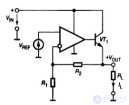
This circuit outputs the negative log of the input. The first op-amp tries to keep its input at ground, which means the current through the 1 kΩ resistor must be proportional to the input voltage. This current passes through the transistor, so the op-amp must hold its output voltage at a level that satisfies the Ebers-Moll equations, which means e^(V out) is proportional to the input current. This means the output voltage must be proportional to the logarithm of the input current (and therefore of the input voltage). The combination of the second transistor and the current source increases the output voltage by a fixed amount, and the second op-amp amplifies it by a factor of 16.
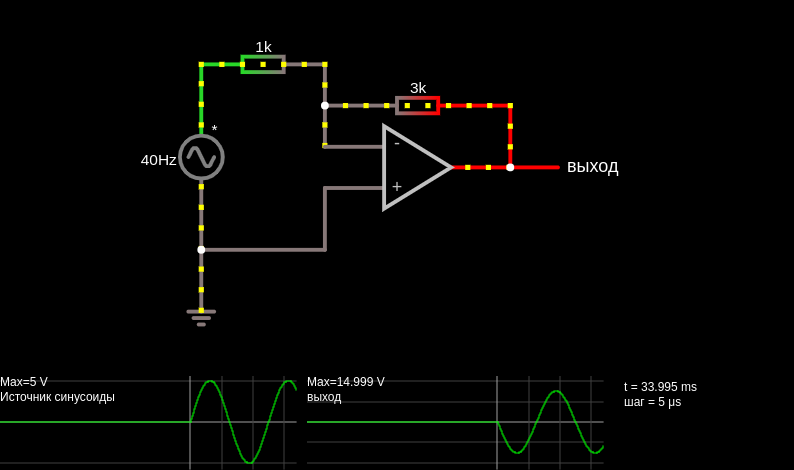
This page is a utility for simulating logarithmic amplifier (op-amp) online with specified initial values.

Comments